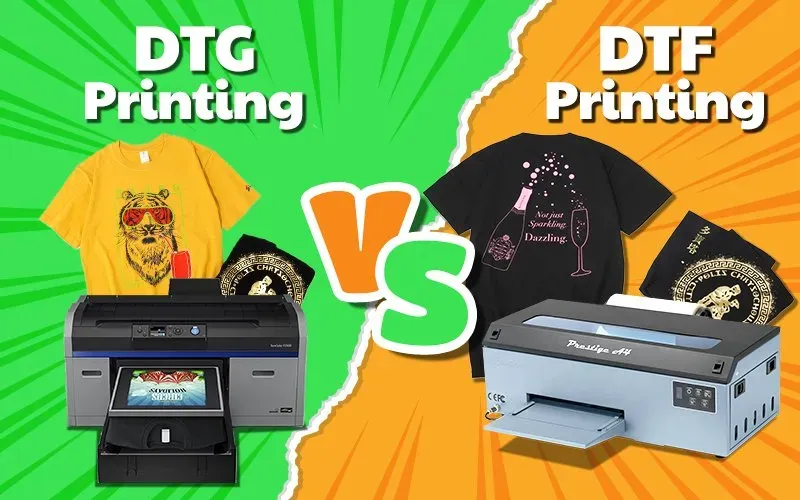
DTF vs DTG printing sits at the heart of today’s apparel production. In a DTF vs DTG comparison, brands weigh film-based transfers against direct-to-garment results. This guide breaks down how each method works and what outcomes to expect. It also covers costs, care, and the fabric mix you’ll target. With a clear view, you’ll choose finishes that match your brand.
From a semantic perspective, these options map to film-based transfer workflows versus direct-fabric printing of artwork, each with distinct color, texture, and care profiles. The film-transfer path often delivers broad fabric compatibility and crisp edges, while the direct-to-fabric approach prioritizes a softer hand and smooth gradients on cotton blends. LSI principles suggest framing related terms such as print-on-demand efficiency, ink chemistry, washfastness, and production scalability to guide decision-making. For brands, a balanced mix—using film transfers for performance fabrics and dye-based prints for premium cotton—can optimize both cost and customer experience. By presenting the choice in broader manufacturing terms, you can align production realities with your brand story.
1. DTF vs DTG printing: Key Differences in Color, Texture, and Durability
DTF vs DTG printing represents two distinct pathways to apparel decoration, each with its own strengths. DTF uses a transfer film and an adhesive layer to move the design onto the garment, while DTG prints ink directly into the fabric fibers. This fundamental difference shapes how colors render, how edges appear, and how the print behaves over time, especially across different fabric types.
Understanding these core mechanics helps brands forecast outcomes—from edge sharpness to hand feel. In the DTF vs DTG comparison, many brands note that DTF tends to deliver vibrant colors and clean outlines on a wider fabric range, whereas DTG shines with subtle gradients and photographic detail on high-cotton fabrics. Durability also varies with care, wash cycles, and the specific inks and films used.
2. Direct to Film vs Direct to Garment: Choosing the Right Process by Fabric Type
Choosing between direct to film vs direct to garment should start with fabric reality. DTF’s transfer film and adhesive enable prints on blends, synthetics, and non-cotton fabrics, expanding your potential product lineup beyond cotton. DTG, meanwhile, excels on 100% cotton and natural blends where the ink can bond deeply with fibers for a soft hand.
Practically, fabric composition dictates outcomes: DTF can maintain color integrity across a broader spectrum of fabrics, while DTG requires pretreatment and careful ink management on non-cotton materials to sustain vibrancy and edge quality. This fabric-driven distinction is a central factor in deciding which method best aligns with your material mix and care expectations.
3. Cost and Throughput: T-shirt Printing Costs and Scale Considerations
Cost and throughput are pivotal when mapping a production plan. DTG setups may incur higher per-print costs in small to mid-scale runs due to pretreatment, longer dry times, and routine printer maintenance. Yet, for intricate, highly detailed designs, DTG can be cost-efficient at the right run size by preserving color accuracy and gradient depth.
DTF often offers favorable unit economics for larger runs because the post-press steps can be more streamlined, and the process can support quick multi-garment presses once films are prepared. For growing brands, weighing t-shirt printing costs against order size and SKU complexity is essential to avoid bottlenecks and maximize margin.
4. Fabric Printing Methods: Aligning DTF and DTG with Your Material Mix
Fabric printing methods shape your options for texture, durability, and care. DTF’s transfer-layer approach tends to produce a robust, sometimes slightly firmer hand, particularly on performance fabrics, making it suitable for athletic wear and bold color blocks. DTG offers a smoother hand on high-quality cotton and natural blends, which can enhance the premium feel of your core tees.
The material mix informs your workflow: DTF performs well on poly blends and synthetics, while DTG’s effectiveness hinges on appropriate pretreatment and ink chemistry. A thoughtful plan that matches fabric types to the right method can reduce cracking, maintain edge sharpness, and ensure consistent wash performance across products.
5. Quality Control and Color Management Across Methods
Quality control remains essential regardless of method. DTG quality relies on printer calibration, color management, fabric pretreatment, and ink performance on chosen fabrics. DTF offers consistency across a broader fabric range but requires careful selection of films, powders, and presses to uphold adhesion and color depth.
Establishing a robust QA routine—sample testing, wash tests, and standardized heat-press times—helps brands preserve a reliable appearance and feel across garments. Effective color management and artwork prep, tailored to each method, support sharp edges and uniform color transitions that align with brand identity.
6. Practical Guidance: Testing, Hybrid Approaches, and Long-Term Brand Strategy
Practical guidance emphasizes starting with product testing and small-scale pilots. Print samples on your most common fabrics and conduct wash and wear tests to gauge durability, color retention, and hand feel. Document results to inform whether DTF, DTG, or a hybrid approach best fits your product roadmap.
Many brands successfully adopt a hybrid strategy—using DTF for performance fabrics and DTG for premium cotton lines—to expand product offerings without compromising quality. This approach supports a resilient supply chain, balanced costs, and a branding narrative that highlights fabric versatility, print technology, and responsible production practices.
Frequently Asked Questions
DTF vs DTG printing: how do color vibrancy, durability, and t-shirt printing costs vary with run size?
DTF vs DTG printing offer different cost and quality dynamics. For large runs, DTF often delivers lower per-unit costs thanks to efficient film prep and quick press times, while DTG can be more cost-efficient for small, highly detailed cotton designs when pretreatment and ink costs are managed. In terms of color vibrancy and durability, DTF provides bright colors and sharp edges across a wide fabric range, whereas DTG excels at smooth gradients and a soft hand feel on 100% cotton. Choose based on run size, fabric, and desired product experience.
Direct to Film vs Direct to Garment: which works better for blends and synthetic fabrics?
Direct to Film (DTF) shines on blends, poly, nylon, and other synthetics thanks to the transfer film and adhesive layer, enabling reliable adhesion across fabrics. Direct to Garment (DTG) is more fabric-dependent and often performs best on 100% cotton with pretreatment, while non-cotton fabrics may require adjustments. For blends and synthetics, many brands prefer DTF for consistent color and durability across fabrics.
DTF vs DTG printing: how do hand feel and edge definition compare on apparel?
DTF prints tend to feel slightly firmer due to the transfer layer, but edges are crisp thanks to the transfer film. DTG generally yields a softer hand on cotton because ink bonds with fibers, though white-ink management on dark garments requires careful pretreatment. The choice depends on product goals and the desired texture and edge clarity.
DTF vs DTG printing: what are the main cost, speed, and scalability considerations?
DTG setup and per-unit costs can be higher for small runs due to pretreatment, maintenance, and longer drying times. DTF often offers lower unit costs for large runs since film prep and batch presses scale well. For scale, consider total cost of ownership, including consumables, equipment, space, and your expected order size and SKU complexity.
Which fabrics are best suited for DTF printing versus DTG printing, and how does fabric compatibility influence your choice?
DTF is versatile across cotton, blends, polyester, and other fabrics, making it a strong choice for mixed-fabric programs. DTG performs best on high-cotton content items with pretreatment and ink chemistry shaping the result. Consider your most common fabrics, care guidelines, and how each method handles shrinkage, cracking, and wash durability.
What practical workflow and quality-control steps help ensure consistent results when choosing between DTF vs DTG printing?
Start with product testing on your common fabrics and perform wash tests to gauge durability. Implement color-management and edge-sharp design prep, with attention to white-ink layering for DTG and precise film adhesion for DTF. Establish a simple quality-control checklist for print alignment, color consistency, and washfastness, and document results to guide production decisions.
| Aspect | DTF (Direct-to-Film) Key Points | DTG (Direct-to-Garment) Key Points |
|---|---|---|
| How they work | – DTF: Design is printed on a transfer film with specialized inks, then heat-pressed onto the garment using an adhesive/curing layer; the film serves as an intermediary, enabling vibrant prints across a broad fabric range. | – DTG: Ink is printed directly onto the fabric and bonds with the fibers; best on 100% cotton and natural blends; results depend on pretreatment and ink performance. |
| Fabric Compatibility | – DTF: Versatile across cotton, blends, poly, nylon; strong color blocks and edge definition; less fiber absorption dependency. | – DTG: Best on 100% cotton and natural blends; pretreatment is often required for non-cotton fabrics; performance hinges on fabric and ink compatibility. |
| Color Quality & Edges | – DTF: Bright colors with sharp edges due to the transfer film and adhesive layer; excellent for complex designs. | – DTG: High color gradients and smooth transitions on cotton; white ink behavior and edge brightness depend on pretreatment and fabric darkening handling. |
| Hand Feel | – DTF: Slightly firmer hand due to the transfer layer; can suit athletic wear or durable finishes. | – DTG: Softer hand on high-quality cotton; may be less forgiving on dark fabrics without proper pretreatment and white ink management. |
| Durability & Care | – DTF: Durable adhesion; less prone to cracking; performance is less fibers-dependent, good wash stability. | – DTG: Durable with proper pretreatment and ink management; care and wash guidelines impact long-term color retention and edge integrity. |
| Cost, Speed & Scale | – DTF: Lower per-unit costs for large runs; faster post-film setup; upfront film/adhesive costs but scalable for bulk production. | – DTG: Higher setup/maintenance costs; more cost-effective for small runs with detailed artwork; efficiency grows with scale and automation. |
| Quality Control & Consistency | – DTF: Consistency across fabrics with fixed film/adhesive; requires control over films, powders, and presses to maintain uniform adhesion and color depth. | – DTG: Dependent on printer calibration, pretreatment, and ink performance; robust QC (tests, wash tests, timing) is essential. |
| Artwork Prep & Color Management | – DTF: Designs translate well to transfer film with high-contrast colors, solid fills, clean vectors; emphasizes sharp edges. | – DTG: Requires high-resolution raster artwork, color profiles, mindful white ink layering to prevent banding and color shifts on fabrics. |
| Workflow & Equipment | – DTF: Film-printer, curing station, reliable heat-press; film preparation, adhesive application, and curing steps. | – DTG: DTG printer, pretreatment equipment, color-management workflow; ongoing maintenance and ink management. |
| Practical Tips & Best Practices | – Test across fabrics; plan color strategy; invest in pretreatment and curing; plan for scale and QC; align with brand story and sustainability commitments. | – Test artwork on cotton and non-cotton; maintain consistent pretreatment levels; ensure proper white ink handling for dark fabrics. |
| Best Use Scenarios | – DTF: Versatile across fabrics, bold graphics, large-volume runs, cost efficiency for mixed fabrics. | – DTG: Premium cotton items, soft hand feel, high-detail artwork, smaller runs or boutique lines, photography-like designs. |
| Common Mistakes to Avoid | – Rushing testing across fabrics; neglecting pretreatment or curing steps (DTG); failing to optimize edge quality and transfer settings (DTF). | – Skipping pretreatment or improper curing; underestimating white ink management; not testing on dark fabrics. |
Summary
Conclusion to follow.